


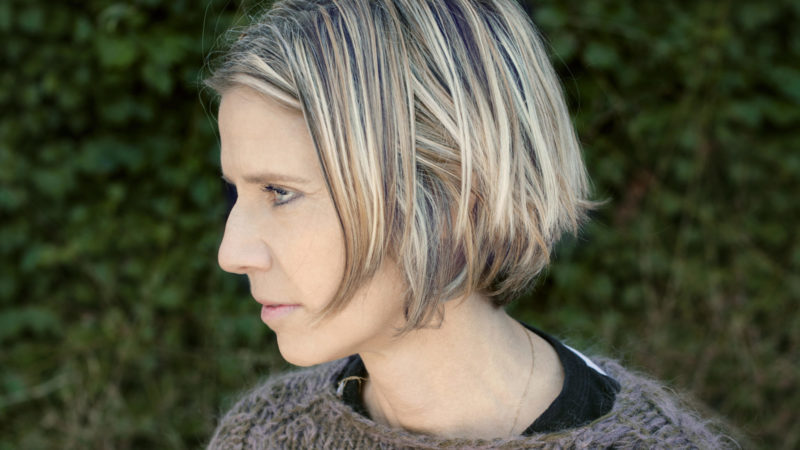
Joey was coarse and violent and possessed of a certain harsh wisdom and when I asked him in the tattoo shop how my pal Liza was doing, I hadn’t seen her in a while, he shot me a hard look, impatient and pained, before answering. Joey knew Liza as a mom, a friend, a woman who had served prison time and had struggled to pull her life together. I knew her as my New Orleans weed connection who lived downstairs during what for me was the very carefree summer of 2009.
He grinded his molars for a moment with the attendant glare. “Sometimes the pain wins,” Joey finally said.
I’ve been thinking about Liza and a section in Darcey Steinke’s new non-fiction, This Is the Door: The Body, Pain, and Faith (HarperOne, 2026), where she is reflecting on a 1993 interview she conducted with Kurt Cobain for Spin magazine, describing him as the most honest and unashamed person she had ever met when it came to talking about his suffering. Cobain committed suicide in 1994, an act Steinke calls, but by no means endorses as, “the ultimate painkiller.”
This Is the Door is a richly reported historical and personal deep dive into pain and its many permutations and implications—in art, relationships, and beyond. The underlying pain that drives This Is the Door begins with the author rupturing a spinal cord disc and ends with a deeper understanding of pain at its most universal and ineffable: “Pain made a hole inside me,” Steinke writes in her afterward, “a space that remains open, tender, and mysterious.”
A sharp, vulnerable, and occasionally cranky spirit cuts through each chapter as the author sifts the viscera of pain, exploring for signs of historic divination while detailing the “somatic and spiritual” dimensions of back pain, knee pain, pain in the brain, heartache, heart disease, skin disease, and pains of a gendered and oftentimes politicized variety. “There is the pain of menstrual cycling, menstrual cramps and endometriosis,” she writes in her chapter on the breast. “There is the pain of living under patriarchy, misogyny, rape, sexual violence, workplace harassment, ageism.”
“I wish I could eat your cancer when you turn black,” Cobain sings on “Heart-Shaped Box,” released in August 1993, about six months before he took his own life. The line echoes through to Steinke’s book, where a major theme emerges around her late father’s failings and his pains, his prostate cancer, their life of father-daughter struggle, and his death. There is also poignancy in noting that Steinke, who suffers with heart disease, has a human heart tattooed on her arm. Talk about wearing it on your sleeve.
A sharp, vulnerable, and occasionally cranky spirit cuts through each chapter as the author sifts the viscera of pain
As a writer, Steinke is masterful at limning what can be an awkward space between frankness and grace when it comes to pains of the heart and family—whether it’s her father, her mother, or she and her husband within the long haul of marriage and family life.
Steinke writes with blushing humor about her husband’s knee pain, and issues with intimacy relating to said pain, while also detailing how Steinke’s journey in pain focused her and her spouse on aging together, both in place and in motion. He says to her at one point, “As our bodies break down, I hope we can be gentle with one another.”
The most searing paragraph in the book may be when, on the night before Steinke’s back surgery, she and her husband are holed up in a hotel near the hospital and he assists her to the bathroom. In the moment, she experiences “a new and intense intimacy with my husband; anguish and empathy radiate out from his face.”
This Is the Door begins with a scooch (as in, “scooch over, honey,”) and ends with an open-ended inquiry about the mystery of what lies ahead when it comes to the intersection of divine love and frail flesh. The opening chapter finds Steinke mid-battle with the ruptured disc, trying to write while balancing and standing. She can’t sit down because of the pain. She shares where it all began, not with a car accident or a bad fall, but with a small moment with her husband: while readjusting in a bed to accommodate his arrival one Brooklyn evening, Steinke experienced an uh-oh popping sensation in her spine.
From there Steinke winds briskly and intensely through the medical and paramedical establishment to an eventual healing that cuts across various historical agonies and figures: she travels to Lourdes for the healing waters, reflects at length on Frida Kahlo’s anguishes and art, offers insight on Nietzsche and his horse-flogging moment, considers and rejects New Age bromides about the source of pain while also embracing rituals that aim to heal the pain. The idea that pain comes from an emotional root, she argues, is as seductive as it is dangerous, and yet “faith in these rituals is an important part of healing.”
The pain Steinke faced was isolating and highly disruptive, she writes, “but it also opened a wormhole into other kinds of suffering—heartbreak, childbirth, my mother’s depression, her breast cancer, my heart disease, and my father’s prostate cancer.” She interviewed “nearly a hundred people” for the book, she reports, many “sufferers, who, like me, were pushed into a duality, estranged from their former lives but not yet able to access a new one.”
In a Zoom interview, Steinke, 63, is free from back pain but just getting over the flu. There’s always something.
The author of Jesus Saves, Sister Golden Hair, Suicide Blonde, and a healthy handful of other books has an active lifestyle, a love for ocean swimming and for punk rock. A Virginia-raised daughter of a Lutheran minister, Steinke is an open-minded secularist who appreciates the comfort the Christian faith provides to believers, and who says of the possibility of an afterlife, “You’ve got to have a little mystery.”
Of her late father she says, “He was difficult and we struggled,” before offering an elegy of love and appreciation for him that is reflected and amplified throughout This Is the Door. In struggling through her pains and searching for a spiritual painkiller of sorts, Steinke came to a greater appreciation for others’ suffering and their spiritual guideposts. “My father taught me you don’t tell anyone what to believe,” she says. “Nobody wants to hear that you have it figured out.”
“The thing about pain that is so powerful is it makes you realize the reality of other people’s pain,” Steinke adds. Her journey to healing, she notes, was peppered with “people denying my pain,” including one particularly non-empathic sports medicine specialist whom Steinke sought out early on. She eventually finds a surgeon, Dr. Yoshihiro Katsuura, who repairs her back and earns This Is the Door’s dedication in the process.
The pain Steinke faced was isolating and highly disruptive, she writes, “but it also opened a wormhole into other kinds of suffering—heartbreak, childbirth, my mother’s depression, her breast cancer, my heart disease, and my father’s prostate cancer.”
Steinke drew her title from Shakespeare, the scene when Macbeth tries to casually direct Macduff to the chambers of King Duncan. Macduff is there to wake the king, but Macbeth has just murdered the king. The door stands as a symbolic sentinel between life and death, where the veil can be thin and where, sometimes, the pain can win. Where, eventually, the pain will win, even if it’s a peaceful passing in the night.
This universalizing conceit is the crowning success of This Is the Door, which enters a literary field crowded with writers meditating on their own pain. Steinke is clear-eyed on readers’ limited interest in reading about pain other than their own, or pain that they can identify with because they have endured a similar kind.
“People want to get better when they get sick,” says Steinke. She says she read nearly fifty pain-focused books on the journey toward healing, and that “about ninety percent were about searching for a cure and not about the spiritual aspects of being sick and being human, or being sick in your community. Some [of the books] had faith intersections, some did not. The search for a cure is like the search for god.”
Steinke, who has taught at Columbia University and elsewhere, deployed her academic chops to unwind the historical record on suffering. The power of her pain would be more impactful, she realized, if she wrote about suffering in a manner that treated it as “completely commonplace.” Like Dostoyevsky, she says with a laugh, Steinke’s only fear when it came to This Is the Door was to end up being unworthy of her suffering.
“Pain, while terrible, connects us to others, both known and unknown,” she writes. “It can also be projected out and held in art, poetry, music, and religion. Creativity itself is nurtured by suffering. For me, writing—working on sentences for rhythm and clarity, detailing fictional characters whose pain can mediate my own—is an effective painkiller.”
Or, as Bob Dylan sings on “Not Dark Yet,” his 1997 meditation on aging and mortality, “Behind every beautiful thing, there’s been some kind of pain.”