


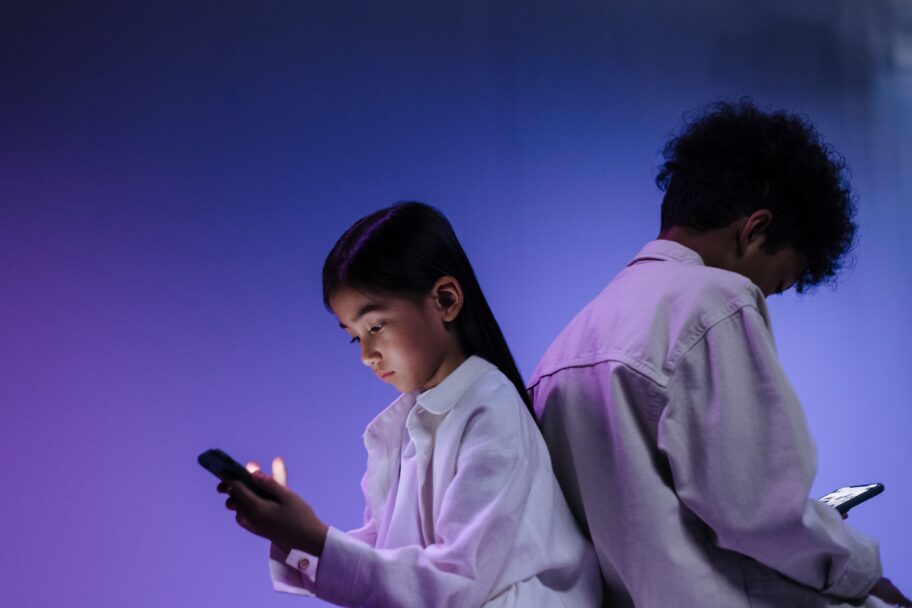
Masha Rubin, a mum of three, including two teenagers, was watching TV when Australia’s communications minister, Annika Wells, announced a social media ban for all Australian children under the age of 16.
“I immediately felt relief,” Rubin said. “I knew that it meant my 12-year-old could no longer fight with me about having a phone anymore, because suddenly it wasn’t an option.”
In Australia, children had access to all the world’s major social media providers: TikTok, Instagram, Snapchat, YouTube, X, Facebook, Threads, you name it. Around 1.3 million Australian children aged 8 to 12 used social media or messaging services in 2024, despite most platforms officially requiring users to be at least 13. Parents’ and teachers’ concerns will sound familiar the world over: distracted students, disrupted sleep, cyberbullying, endless scrolling, and growing worries about mental health. As Australian prime minister Anthony Albanese put it when announcing the ban, “Social media is doing harm to our kids, and I’m calling time on it.”
But now, since December 2025, children under 16 have been unable to access major social media platforms in Australia, with companies facing significant fines if they fail to remove underage users. Parents are not liable for breaches; enforcement sits squarely with the platforms themselves.
Wells, the communications minister, framed the ban as a historic reform: “Australia, a continent so far away and now yet so far ahead when it comes to online safety. [Today] will be remembered as a moment that sparked a movement.” In her view, the reform was long overdue and stood to change many lives, especially those of the country’s young people. “This law isn’t the result of one voice, but the power of many united in purpose, driven by hope, and committed to protecting our kids,” she said.
The eSafety Commissioner, Australia’s national body responsible for online safety regulation, strongly backed the social media ban. “The social media age restrictions aim to protect young Australians from pressures and risks that users can be exposed to while logged in to social media accounts,” it said in a media release. “These come from design features that encourage them to spend more time on screens, while also serving up content that can harm their health and wellbeing.”
The impact of the social ban has been immediate, and Rubin described a shift in the atmosphere at her home. “Since the ban came in, my 15-year-old has been listening to lots more music, trying to figure out his style,” she said. “Social media, it’s constant noise in your head, because it’s there all the time. I’m thankful I didn’t have it as a child. I believe it’s healthier now that it’s banned for our kids.”
“Australia, a continent so far away and now yet so far ahead when it comes to online safety.”
The ban has garnered global attention. Keir Starmer, the British prime minister, is proposing a similar social media ban, modelled on the Australian laws, with even stricter enforcement, including banning chatting with strangers on gaming platforms and restrictions on scrolling late at night for all teenagers under 18. The proposed ban has not yet come to Parliament, however.
But even as other countries eye copying the ban, responses here in Australia have been divided. Critics do not necessarily dispute the risks of social media, but they question whether a blanket ban is the right tool.
Caroline Thain, a clinical adviser with Headspace, a youth mental health organization, takes a nuanced view of the ban. “The evidence shows that social media can pose risks to young people’s wellbeing, especially when they’re exposed to harmful or inappropriate content,” she said. “At the same time, it can offer real benefits by creating connection, belonging, and access to credible mental health information.”
Headspace is still gathering data on the effects of the ban, but Thain remains focused on understanding the way young people are interacting online and the ways the ban might affect their social interactions. “Young people tell us that social media can be both protective and harmful for their mental health,” she said. “It’s where many connect with friends, access support, and express themselves. What matters most is creating safer online environments for young people through education, stronger regulation, and better support for families.” That might mean moving away from blanket restrictions and toward more targeted measures, like limiting features designed to keep children endlessly scrolling, while preserving access to online communities and support networks that many children enjoy being part of.
Similarly, Ben Singh, whose work at Adelaide University focuses on digital health, is unsure whether the ban will succeed in protecting children. “I understand the motivation [for a ban, and] particularly concerns about heavy use and online harms, but I’m cautious about a blanket ban,” Singh said. “Our research shows that the relationship between social media and wellbeing is not linear; risk is highest at the extremes. While very high use is consistently associated with poorer wellbeing, complete non-use is not always protective, especially in older adolescents.” He said that in a study he conducted, “moderate social media use was associated with the most favourable wellbeing outcomes,” suggesting that a ban “may benefit some young people while inadvertently disadvantaging others.”
“What matters most is creating safer online environments for young people through education, stronger regulation, and better support for families.”
Leonardo Puglisi, the founder of Channel 6 News, began his journalism career at just 11 and is one of Australia’s most prominent young media figures. Having built his career as a teenager online, he sees the ban as misdirected, even as it does not directly affect his social media access, now that he is 18. “Australia’s social media ban is a mistake,” Puglisi said, “because a blanket ban cannot account for nuance, including vulnerable young people who rely on social media for important connections, along with the fact that the ban does not remove genuinely harmful content. Instead [it is] effectively kicking the can down the road in terms of when young people will see it.” He also noted that many young people have found ways around the ban, including using VPNs or simply migrating to platforms which do not fall inside the ban, and the verification tools in place compromise privacy for users.
Puglisi believes that instead of a ban, existing mechanisms could have been strengthened instead. “The government has tools at its disposal, like the eSafety Commissioner, for removing harmful content via takedowns—which it has used before,” he said. In his mind, a more targeted approach could be better. “Something like that actually removes the content instead of supposedly hiding it from young people,” he said.
For now, for parents across Australia, the social media ban is no longer theoretical. “Screentime is the biggest battle parents have with kids in this generation,” Rubin, the mother of three, said. “It’s all around us, and it’s addictive, so this ban aligns with my values. Delaying [access for] kids as long as possible, especially during these critical brain development years, I think it’s important.”