


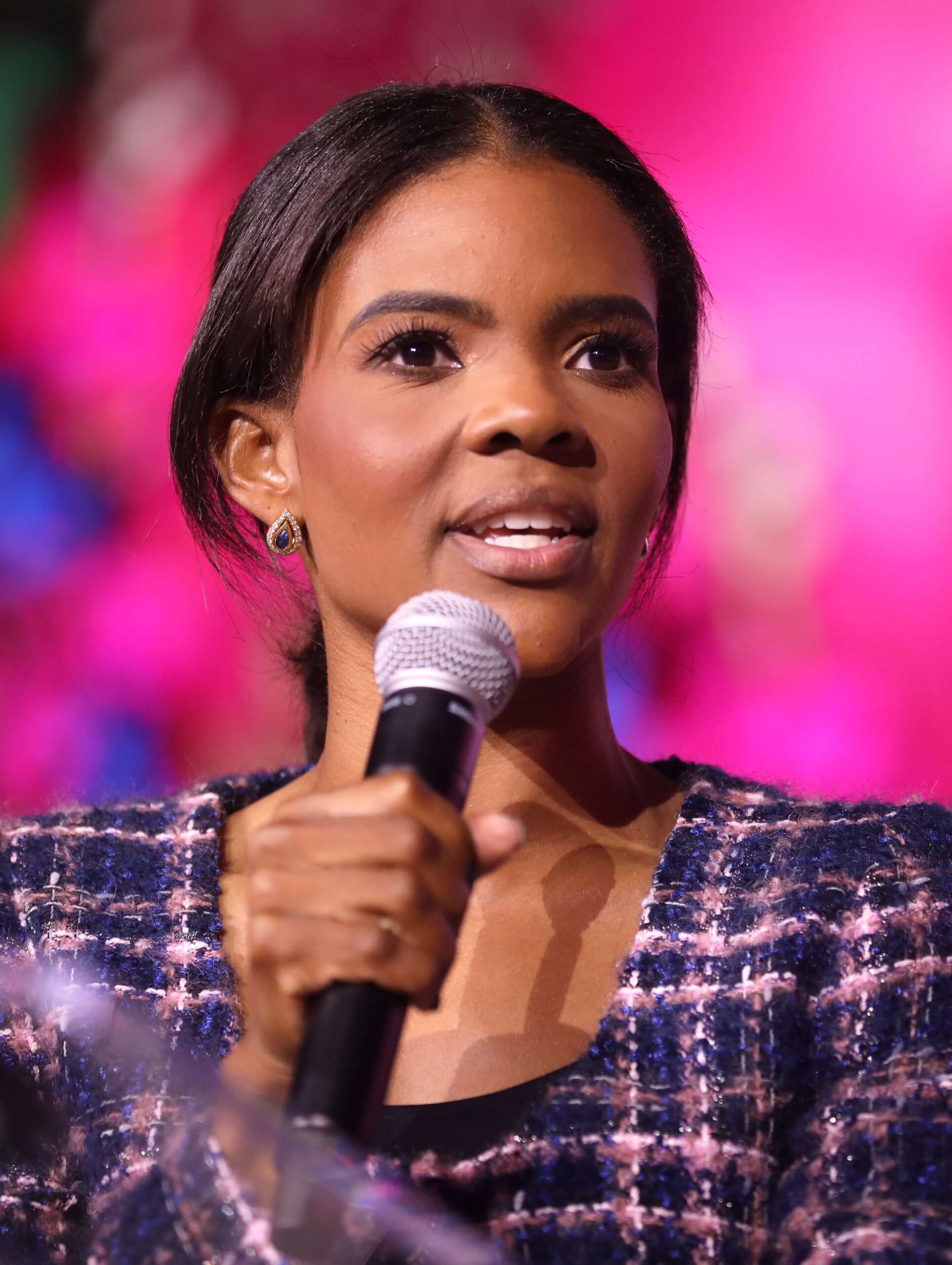
In the turgid miasma of online antisemitism, one voice stands out: Candace Owens.
Owens is not one to traffic merely in familiar antisemitic cliches of Jewish control of Hollywood or finance. No, like her broad palette of conspiracy theories—e.g., that Brigitte Macron is a transgender woman and Emmanuel Macron’s father—her antisemitism is an outlandish concatenation of half-baked lunacies cobbled together from the fringes of the brain-rotted internet. To take but one recent example: Jews didn’t have Charlie Kirk assassinated merely because he questioned American support for Israel; rather, they offered him as a blood sacrifice (in cahoots with Erika Kirk) because they practice the occult.
But the most bizarre aspect of Owens’s antisemitic rants is their frequent references to hitherto obscure figures in Jewish religious history: the seventeenth-century false messiah Sabbatai Zevi and an eighteenth-century successor named Jacob Frank. Having spent much of my academic career studying these figures (and writing a book about one of them), it was disorienting to hear their names on Owens’s lips; I began to have questions. Why is Owens fixated on these mostly-forgotten figures in Jewish history? And how did she even find out about them?
Now, one caveat: Owens may just be grifting here. She is all about the Benjamins, and her followers on social media have almost doubled in the last year alone. And her views have been quite malleable in the past: Owens is a former progressive (her parents successfully sued her school district for failing to protect her from racial discrimination) and anti-harassment campaigner who abruptly switched teams in 2017 to join conservative Gamergate harassers Mike Cernovich and Milo Yiannapoulos. She is also a one-time colleague of politically conservative Orthodox Jews Dennis Prager and Ben Shapiro, yet she now claims that Jews are or were in control of the slave trade, the Mafia, and the United States government. (Owens has clearly never been to a bar mitzvah; we can’t even control the lines for food.)
So maybe it’s a mistake to take anything Owens says seriously, if she’s reaching for whatever idea will get her more plays. Then again, given her 25 million YouTube followers, maybe it’s a mistake not to take her seriously. Let’s discuss, then, Owens’s analysis of early modern Jewish apostasy.
Sabbatai Zevi lived from 1626 to 1676 in present-day Turkey. In the early part of his life, he was an eccentric figure, not unlike people you would see in the old Times Square shouting that the end of the world is nigh. Scholars conjecture that he had bipolar disorder. But in 1665, he was discovered by a well-known Kabbalist, Rabbi Nathan of Gaza, who proclaimed him the Messiah.
This was like a spark lit among dry pine needles. It came only 17 years after the horrifying Chmielnicki Massacres in present-day Ukraine, in which an estimated 100,000 Jews were murdered, and in the context of a Jewish mystical tradition which had heightened messianic expectations since the 1492 expulsion from Spain. Sabbatai Zevi reached the heights of his popularity in 1666 (a coincidence noted by Christian observers, who identified him as the Antichrist), and eventually amassed such a following that he was thrown in jail and then brought before the Ottoman Sultan, who gave him the choice to convert to Islam or die.

It was at this moment that Sabbatai’s messianic followers believed he would seize the crown of the Ottoman Empire from the Sultan, restore Jewish sovereignty in the land of Israel, and lead a return of the Jewish people there. Instead, Sabbatai chose to save his skin and convert to Islam.
This was the end of Sabbateanism as a mass movement. But, as Leon Festinger described in When Prophecy Fails (1964), the most devout followers redoubled their devotion. Some remained outwardly Jewish and secretly heretical; others converted outwardly to Islam but remained secretly Jewish. Astonishingly, this smaller, secret movement lasted through the twentieth century, and a few of the faithful remain even today, living in Turkey and Israel. But mostly, Sabbateanism dropped out of historical relevance. Its most lasting impact, as the pioneering scholar Gershom Scholem wrote, was to greatly weaken rabbinic authority and pave the way for reforms that would come a century later.
Though not, as we will see, for Owens.
One of the successors to Sabbatai Zevi was Jacob Frank (1726-1791), who led a sect of believers in present-day Poland. As Frank’s popularity grew, the rabbinic establishment reported his sect to the Christian authorities as a heretical movement, and they were offered the same choice as Sabbatai: convert (this time to Christianity) or die. In 1759, they converted en masse, in the largest mass apostasy in Jewish history.
That conversion was eventually exposed as a sham, and Jacob Frank spent 12 years in prison in the monastic fortress of Częstochowa, the national shrine of Poland. Following his release, he preached a more radical antinomian philosophy (which is what I wrote my book about), blending heretical Judaism, Western esotericism, and Christianity, and had a strange second career as a kind of European esoteric charlatan. He died in 1791, and his movement withered not long after.
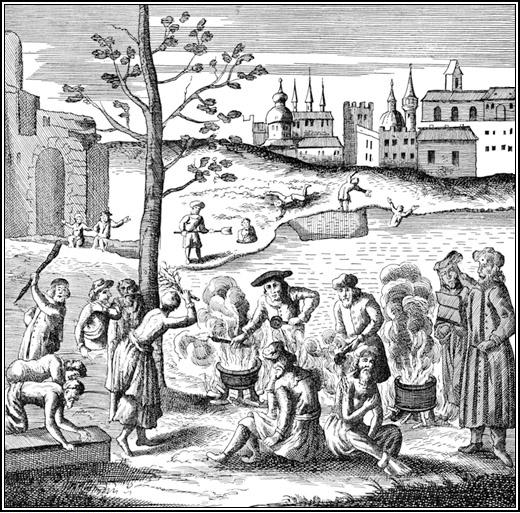
In 1759, Frank’s followers converted, in what was then the largest mass apostasy in Jewish history.
Antisemitic conspiracy theories are 99 percent false—but they do have grains of truth to them. In this case, it is true that Frank’s followers, especially one Moses Dobruschka, had contact among the Freemasons, and ran guns from the Habsburg Empire to the French Revolutionaries. It is also true that others, including the ancestors of Supreme Court justice Louis Brandeis, did eventually become prominent Jewish reformers in the nineteenth century, although Scholem rather overstated their importance. And in the Ottoman Empire, some of Sabbatai’s followers’ descendants became some of the leading Young Turks who helped establish secular Turkey; the scholar Cengiz Sisman has written brilliantly about them.
It is also true that Zevi and Frank abrogated parts of traditional Jewish law, including many prohibitions around sex. It was a longstanding idea in Jewish mysticism that many of the ordinary rules that govern Jewish life would no longer be valid in the messianic age. Frank added a further, libertine rationale: God wants people to be free, not constrained by empty and pointless restrictions. Thus these sectarians ate non-kosher food, changed or eliminated some Jewish holidays, and, in rare and ritualized settings, had sexual intercourse outside of marriage. They also transgressed patriarchal gender roles: the Sabbatean community had more female leaders than any Jewish community in history before the late twentieth century.
Naturally, stories of secret, heretical orgies stoke the imagination of heresiologists, fundamentalists, conspiratorialists, and hedonists. And they did, at times, take place, according to the few reliable records we possess. I have further argued that these movements presaged what we now know of as “spirituality”—the possibility of religious experience without religious laws and structures. But neither the historical nor theological activities of these sectarians ever amounted to much. They are footnotes to Jewish history.
But not to Owens.
In the upside-down world of Owens’s imaginaire, many of the people who today claim to be Jews are, in fact, Sabbateans. When she said, on one occasion, “This is the church of Satan we’re talking about,” she was not simply libeling Judaism, but claiming that the Rothschilds, Soroses, and Epsteins of the world are not even real Jews, but either followers of Sabbatai Zevi or heirs to them. Ditto when she accuses Jews of practicing the “occult”—this means Sabbateanism, or sometimes the Kabbalah.
These “Sabbateans,” says Owens, controlled European history and orchestrated the destruction of traditional religion. They didn’t just run some guns to the French Revolution; they puppet-mastered the whole thing. And they didn’t die out a century ago; they are alive, well, and shaping history in smoke-filled rooms.
Where did she even get this stuff? If you think the story’s been weird so far, buckle up.
Believe it or not—and here I am drawing on excellent, as-yet-unpublished research by University of Colorado professor Nan Goodman and independent historian Mark Gunnery—the ultimate source for Candace Owens’s antisemitism is a chemist and Orthodox rabbi named Marvin Antelman.
In the late 1960s, Antelman (1933-2013) was radicalized by racial conflict and white flight in Boston and became active in Jewish extremist circles, including Meir Kahane’s Jewish Defense League. In 1976, he and two other rabbis convened a bogus Jewish beit din (rabbinic court), called the Rabbinic Court of America, at the New York Hilton Hotel. There, they convicted of “betraying the Jewish people” such disparate figures as Henry Kissinger, Noam Chomsky, and the liberal organization New Jewish Agenda. (Most of the “traitors” were liberals; Kissinger was convicted because he had delayed arms shipments to Israel during the Yom Kippur War.) As real rabbinic courts had done centuries earlier to Baruch Spinoza, Antelman’s kangaroo court pronounced the ban of herem—excommunication—against them.
These were, of course, cosplay trials, at once bombastic and ridiculous. Antelman was basically a crank.
Two years earlier, in 1974, Antelman had self-published a book entitled To Eliminate the Opiate, self-described as “[a]n in-depth study of Communist and conspiratorial group efforts to destroy Jews and Judaism.” In it, he claims that Communism, the Jewish Bund, Reform Judaism, the Haskalah (the rationalist “Jewish Enlightenment” of the nineteenth century), the Rothschilds, and the French Jacobins are all derived from the Illuminati, who themselves were derived from the Sabbatean and Frankist movements. Far from being failed messianic sects, these movements were the conspiratorial architects of communism and liberalism alike, up to and including Boston progressives in the 1970s. They were Soros before Soros was Soros. Wrote Antelman:
Whether the Frankists became Jacobins, Reform or Conservative movement leaders, or otherwise, one thing came down from generation to generation in their circles, profound hatred for Torah, true Judaism, the Talmud and the Rabbis, which, unfortunately, manifests itself to this very day among large segments of the leadership of the Conservative and Reform movements throughout the Diaspora.
Indeed, per Antelman, the Frankist-Communist-Reform conspiracy continues to this very day:
The Frankists today no longer call themselves by that name. The Organization has grown into an international group labeled by outsiders as the Cult of the All-Seeing Eye…. In the United States they are most active in Boston, New York, Washington and San Francisco. Their ranks and sponsors include some very famous people, numbering diplomats, senators, governors and clergymen in their ranks…. In Jewish circles, they dominate the Reform movement at many levels and the Conservative movement at the highest level. The late Reform clergyman Maurice Eisendrath and the Conservative cleric Abraham Joshua Heschel belonged to them. Eisendrath was always involved in Communist causes and tried to sabotage the Zionist movement. Heschel was the hero of the New Left’s Ramparts Magazine, and contributed articles to it. Heschel’s book, The Prophets, is two-faced and crypto-Sabbatian, and is used by this elite as a text because of its references to neo-Platonism, Kings and Priests, Greek and Babylonian cults. The other Jewish circles that they dominate are the Anti-Defamation League, the American Jewish Congress and Federations of Jewish Charities in many American cities. One of their cliques of so-called Jewish lawyers is active in the subversively oriented National Lawyers Guild. Their major projects currently include attempts by the American Jewish Congress to destroy the network of Jewish Religious Day Schools in the U.S., and a newly formed women’s activist group, the National Council of Jewish Women, which is agitating for Women’s rights, and is attempting to use Women’s Liberation to destroy the role of women in Judaism.
You get the idea.
The original, 1974 book is very much of its time: McCarthyist paranoia about Commies in the bathroom, filled with references to the Illuminati and with conspiratorial rantings like this one:
We can see from our study of the Frankists and their elite that they were truly monsters. Indeed the concept has been preserved—and not by accident—in the novel Frankenstein, which deals with the creation of the Frankenstein monster. Mary Shelley (the wife of the famous poet Shelley), who wrote Frankenstein, was a member, together with her husband, of the Illuminati. The symbolism inherent in the name Frankenstein is as follows. The word “Frank” stands for Jacob Frank, founder of the Frankists. The “en” is an Anglicization and abbreviation of the three letter Hebrew word “ayin,” which means “eye,” e resembles the first letter and nis for the last. “Stein” in German means “stone.” In the symbol of the Cult of the All-Seeing Eye, as in the great seal of the U.S. found on the American dollar bill, the eye stands over stones, forming the base of the pyramid. So Frankenstein = Frank + eye + stone.
What set the work apart, however, is not only that it was written by an Orthodox rabbi but that it was based, albeit tenuously and tendentiously, on real scholarship. Antelman wrote at least once to Gershom Scholem, who wrote in the margins of his copy of To Eliminate the Opiate: “Nonsense based on me!”
The book was not widely read, but it did circulate among two constituencies: Kahane-adjacent Jewish extremists and antisemites. To wit, according to Wikipedia, “the highest-frequency author citing To Eliminate the Opiate in an August 2022 search of Internet Archive is David Duke in archives of his books My Awakening (1998), Jewish Supremacy (2003), and The Secret Behind Communism (2013).”
The conduit from Antelman to Owens, though, is David Icke, the notorious British football-player-turned-antisemitic-conspiracy-theorist, who cites Antelman multiple times in his 2019 book of 9/11 Trutherism, The Trigger. (Icke is also a favorite, alas, of brilliant but deluded American author Alice Walker, author of The Color Purple.) In Icke, Antelman’s web of Sabbateans, Communists, and Reform Jews becomes known simply as “The Death Cult,” an elite secret network responsible for Marxism, Antifa, Skull & Bones, the ADL, and, of course, 9/11 itself.
For Icke, the appeal of Antelman is clear. First, here’s an actual Orthodox rabbi exposing the international Jewish conspiracy from within. But, second, the conspiracy isn’t even Jewish—it’s a secret cult within Judaism—which means Icke can say he’s not technically antisemitic. (It’s unclear how the Death Cult relates to the reptilian aliens who Icke says are running the planet, but that’s a different story.)
Yet Icke does make some tweaks. First, he depicts Sabbateanism less like a radical communist plot and more like a Satanic cult; second, he depicts it as having infested both Judaism and Christianity:
Rabbi Marvin Antelman describes in “To Eliminate the Opiate” how Sabbatian-Frankists established their own fake systems to appoint rabbis that appear to be the genuine article while pursuing a very different agenda. Antelman described them as ‘barbarians’ who masqueraded as rabbis. He said these same Sabbatian-Frankist groups continue to Christianise Judaism and Judaise Christianity (Christian Zionism) with the ultimate aim of destroying both. The planned replacement is Sabbatian-Frankist Satanism which is why its symbols, methods and ways of life are gathering all around us.
Given Icke’s relatively high profile on the antisemitic internet, these ideas circulate widely, which is where Owens, who frequently cites Icke, picked them up. It is Icke’s Sabbateanism, not quite Antelman’s, that Owens talks about: an “occult” conspiracy that connects the dots between Israel, Epstein, the Clintons, and even Jewish Republicans like Shapiro. It’s also close enough to QAnon’s secret network of often-Jewish billionaire pedophiles—a conspiracy theory newly resonant now that such a network has actually been exposed (albeit with Q’s savior as one of the central villains).
Hopefully you notice the irony: a politically conservative Orthodox Jew pens two weird books attacking liberal Jews, and now they’re being used to attack the state of Israel, the Netanyahu regime, and Jews more generally, all of whom Antelman loved.
I told you it would be a weird story.
At this point, the noise has eclipsed the signal: search “Jacob Frank” or “Sabbatai Zevi” on YouTube, and most of what you get is conspiratorial and/or antisemitic bunk. It has filtered through even well-known online figures like “Professor Jiang,” the Chinese charlatan (not actually a professor) who guilelessly repeats Antelman-Icke-Owens misstatements about Jacob Frank to his 2.2 million YouTube followers. One of his videos is called “Faith of Evil.” (Then again, maybe don’t watch those videos, since if you do, Google’s algorithm will immediately start feeding you rabid antisemitism, as it did to me.)
I admit to a certain despair regarding whether this genie can ever be put back into the bottle. Obviously I’m not concerned with the reputations of Sabbatai Zevi and Jacob Frank, or with the fact that around 90 percent of what is said about them is historically inaccurate. But I am concerned that this twisted antisemitic conspiracy theory puts real Jews, or people who appear to be real Jews, in danger.
Rational attempts at debunking this stuff won’t work; they didn’t work with QAnon, Plandemic, or Trumpist Election Denial, let alone with earlier iterations of what Richard Hofstadter called the paranoid style in American politics. Conspiracy theories aren’t believed because they are intellectually sound; they are believed because they address cognitive dissonance. They are a form of motivated reasoning, in which a need to find a single explanation for complicated, sometimes intractable problems yields preposterous connect-the-dots theories about hidden conspiracies and malevolent actors. Like gnosticism, conspiracy theories explain why the world is not as it should be: because bad actors are in charge. They confirm one’s priors and validate one’s prejudices. Ultimately, it’s easier for some people to believe that a shadowy conspiracy of Illuminati are manipulating world politics than that a majority of Americans actually preferred Joe Biden to Donald Trump.
Fundamentally, as J. Eric Oliver and Thomas J. Wood wrote in their important book Enchanted America: How Intuition and Reason Divide our Politics (University of Chicago Press, 2018), belief in conspiracies is based on intuition, instinct, and emotion, not intellection. You can’t argue someone out of them. And even if you could, they’d soon be replaced by something else. Even if we could whack the mole of Icke’s Death Cult, a new paranoid mole would surely pop up to take its place.
Still, conspiratorial antisemitism does seem to be gaining new adherents in the wake of Gaza, Epstein, and now Iran. Right-wing antisemitism is widespread online and in the halls of power in Washington. This is not going to end well for the Jews. And left-wing and right-wing antisemitism are horseshoe-ing together to the point where Nick Fuentes and Ana Kasparian are saying the exact same things about Israel.
Marvin Antelman created an elaborate pseudo-history to explain how liberalism was intrinsically hostile to Judaism. His solution was Jewish militancy in the diaspora and Jewish supremacy in Israel. But Icke’s and Owens’s embrace of his ideas shows that he had it exactly wrong. It is not liberalism but illiberal nationalism that is the threat to Jewish survival, with its definitional hostility to minorities, be they immigrants, non-whites, or Jews.
The world is indeed a place of brokenness, but that is not because of a Sabbatean conspiracy. It is because we are flawed creatures, and among our flaws is the desire to dominate and suppress people unlike ourselves. The very liberalism that Owens and Antelman despise is an attempt to cultivate certain better angels of our nature: reason, reflection, the capacities for human connection and coexistence. These are not the teachings of a false messiah. On the contrary, to whatever extent the messianic age exists, even if only in our imagination, they are its harbingers.