


These fellow-mortals, every one,” George Eliot, the great Victorian novelist, wrote, “must be accepted as they are: you can neither straighten their noses, nor brighten their wit, nor rectify their dispositions.” That kind of acceptance fueled Eliot’s fiction. She wanted to help us learn why other people choose to do the things they do, and why scared, un-self-aware, or thoughtless people often end up afflicting others. Having read Eliot, we might then go on to make better, and wiser, decisions ourselves. Today we call Eliot’s methods and goals realism: we associate them not just with realistic, complicated, flawed characters, but with plots set in the real world, just as it is.
That association may be a mistake. Modern realistic literary fiction, for adults, about adults, may fold in moral instruction, but it tends to depict intractable problems, rather than showing how those problems get solved. Often it takes Henry James, not George Eliot, as its main model. And it avoids imaginary worlds at least as much as it eschews simple wish-fulfillment, in part (only in part) because “literary fiction” over the twentieth century sought distinction from popular modes. That’s one reason mainstream authors who try out nonrealist modes (think Ishiguro, Atwood, Cormac McCarthy) produce near-future dystopias. And it’s one reason why authors who take faith, loss of faith, and spiritual guidance seriously (think Marilynne Robinson) look like exceptions to modern rules.
Those aspects don’t make modern Pulitzer winners worse—it’s apples and oranges—but it does leave these goals open for other writers. If you want moral judgments, expanded sympathies, robust narrative closure, guides for better decisions, and questions about a world beyond this one, you might want authors who have come up through fantasy and science fiction. You might try the worlds those nonrealist writers invent, where geology, biology, physics, or thaumaturgy allow both escapes from our world, and analogies that point back to it, with realistic people who make realistic decisions in imaginary lands. You might also choose to read novels for, and about, teens. Or you might want to do both: more than half the people who read YA these days are adults, myself among them.
You might, for example, try Rachel Hartman, whose first book named Eliot’s Middlemarch as a model. Each of Hartman’s five novels (all shorter than Eliot’s masterpiece) takes place in the same invented world, with four human-led nations: vaguely English Goredd, pious Samsam, sophisticated Italianate Ninys, and seagoing cosmopolitan Porphyria. These nations fight, and make peace, with one another, and with the mountain-dwelling, fearsome, hyperrationalist (think Star Trek Vulcans) dragons. Each book addresses modern-seeming problems through psychologically intricate Goreddi teens: child prodigies, queer coming-out, trans visibility, and long-distance social networks in Seraphina (2012) and Shadow Scale (2015); sexism, sexual trauma, disability sex, and rural/urban divides in 2018’s Tess of the Road (loosely linked to that earlier Tess); settler colonial history, the claims of First Nations, and white privilege with the magnificently sensitive In the Serpent’s Wake (2022).
Which brings me to Among Ghosts (Random House, 2025)—and back to George Eliot. Like Eliot’s first published works—though with more swordfights, more dragons, and less German—Hartman’s latest takes on the history of Western religion: of faith, doubt, visions, and forced conversions. It also responds to familiar Western accounts in which polytheistic cults of ritual sacrifice give way, first to monotheists’ conquering cultures, which offer symbolic substitutes (the binding of Isaac for Jews, Ishmael in Islam), and then, for Christians, to Christ on the Cross. (For some such accounts, try Maimonides, or Rabbi Jonathan Sacks, or James Cone.)
What if, Hartman asks, these accounts get the history backwards? What if the first sacrifices were willing adults, who gave their own lives in service to local communities, and involuntary sacrifice (a.k.a. homicide) came later? What if the greatest sin lies with the proselytizers who showed up later still, and prompted more homicides on behalf of their faith? What if (for Western, white readers like me) people like us have long been the bad guys? And what if progressive, secularizing reformers, who try to improve the lot of all by tamping down bigotry, can still be the bad guys, or fail at being good guys, because we don’t recognize the spirits, traditions, and otherworldly gods we displace?
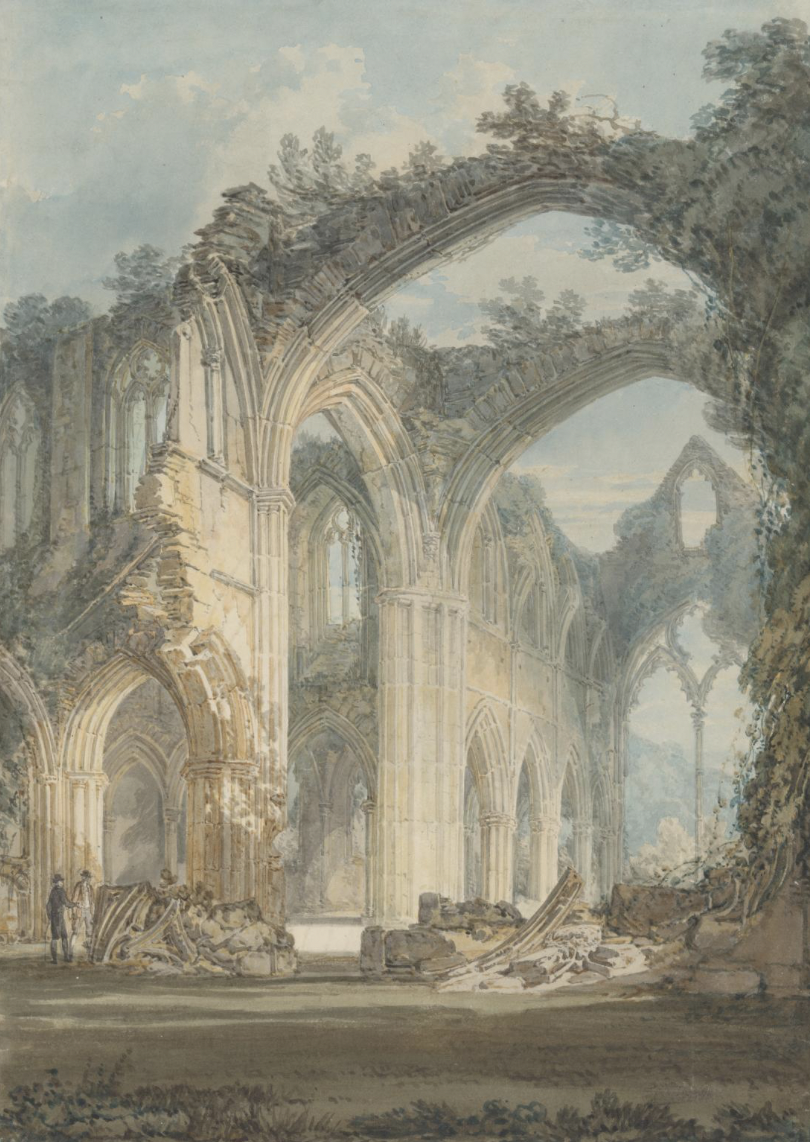
Hartman, in this fifth novel, understands how to set in play symbols for real-life history, how to keep three generations of plot in motion, and how to make them all visible, concisely, through one thirteen-year-old point-of-view character. She’s constructed a novel of churches and ruins, of scorched earth, old ways, dangerous certainties, and discarded beliefs, a novel whose characters have to revise their own understandings of goodness, and of superstition. And she’s done it, too, by penning a timely novel about a plague. She wrote Among Ghosts in our own plague years, the quarantine-COVID months of 2020-2021, when public health, superstition, collective ritual, and communal cohesion seemed to come up every day, and when so many of us longed for some other world. She takes us to a new world, and then points back to this one.
Hartman’s constructed a novel of churches and ruins, of scorched earth, old ways, dangerous certainties, and discarded beliefs, a novel whose characters have to revise their own understandings of goodness, and of superstition.
To see how, you’ll have to know the characters first (warning: spoilers). Charl, our POV figure, has lived a blameless life alongside his philanthropically-minded mother Eileen; her partner (romantic, implicitly; business, explicitly) Sister Agnes; and her other partner, Aris, a former soldier. Together they fled Eileen’s abusive husband, Charl’s father, an earl in Samsam, where the rulers and most of the people follow the Goreddi faith called Allsaints. Now Eileen and company tend an inn in Goredd, in the rundown, remote former port of St. Muckle’s, trying “to make this town nicer for everyone.” Charl wants to prove he’s a man, and to protect himself from bullies: Aris has taught him to fence (with a wooden sword). Their family friend Dr. Caramus just wants to treat diseases. Across the border, several sketchy characters—all taking orders, or money, from the Earl—scheme to kidnap or entice the fugitives back to Samsam.
One of those sketchy characters sets out to ruin St. Muckle’s by reintroducing a plague. It spreads. It kills. It’s gross. Townspeople consider Eileen and her family scapegoats, and would have run them out of town, except that all the survivors have to leave anyway, lest they too grow ill. “Time passes differently during a plague,” Hartman’s narrator muses, with “all the normal things … suspended.” Yet Hartman’s not really writing about public health policy, nor about urban social change. She’s writing about growing up amid panic, with adults who don’t know what to do, and about inherited belief in saints, spirits, legacies and sacrifice. Maybe we need them more the worse things get.
Separated from his family, Charl takes shelter in an abandoned abbey where, not long ago, he saw a teenage bully die in a fiery accident. Who’s to blame? Has he inherited his father’s malice? “Are you your father’s son?” The Earl does not even see Charl as a son, because he’s a raging transphobe—another reason Eileen, and Aris, and Agnes, left Samsam, “to put the ghosts of the past to bed.” Instead Charl finds, in the abbey, literal ghosts, most of them girls and women, who died there before, and can’t fade into oblivion, or not yet.
All of these ghosts haunt the abbey. They all haunt Charl, though some of the girls make friends with him too, bringing what Hartman’s narrator calls “stories, parables and memories,” ways “to understand other points of view.” Some of those points of view belong to “pagans,” others to followers of Allsaints, others still to the dragons who live among humans, in their barely-maintained disguise. “They think, they speak, they’re people,” as Aris tells Charl. But sometimes they’re “burning your town to the ground.”
The ghosts died, violently, but for what? Some just want to “fade gently … into blissful mindlessness.” Others would rather communicate with the living, showing us what they gave up, what we still have. One of the ghosts, “a three-hundred-years-dead twelve-year-old,” talks to Charl like she’s Emily in Our Town: “I have always thought it a pity that we never get to see the world like this while we’re alive.” It’s a world worth saving, but science and good deeds alone—like Eileen’s—won’t be enough to save it, let alone (as Dr. Caramus tells Charl) “to make a better one.”
If you’re looking for Hartman’s history of religion, you’ll find it late in the book: it surprises her characters. Some of it even the ghosts don’t know (warning: more spoilers). In Hartman’s account of Goreddi and Samsamese history, the oldest, most localized forms of belief did least harm. The River and Mountain villages, Neolithic or Bronze Age-style cultures in the mountains long ago, made ghosts only from the willing and the wise. Some of them chose to die and become ghosts so that they could keep their wisdom in the community (it would be lost if they died and faded away).
As things changed, as city-states expanded, later generations—not knowing better—chose their victims communally, without consent, “to appease the gods, or for the greater good, or something.” Others still, closer to Charl’s own day, died when the now-dominant religion of Allsaints, proselytizing by sword, arrived. And, of course, the ghosts stay tied to the abbey, built on the site where they died: once a holy place, always a holy place, as any archaeologist will confirm. It’s one commonly supposed (or taught, or preached) history of Western religion, from archaic child-killings and local ritual murders to the Akedah or al-Adha and then to Christ’s sacrifice, except in reverse. The latest, most “civilized” versions turn out to be the most barbaric.
Hartman’s ghosts help Charl fight back against the malicious, but sometimes repentant, adults: against his father’s agents, dragon and human, and against the bigoted townspeople—forerunners of modern right-wing populism—who blame his immigrant family for all bad news. Charl, and the adults around him, and Hartman’s readers, get to learn how the past and its spirits stand behind us when we make our toughest calls: when we choose violence against others, or when we choose to give up our own lives. It’s not a choice anyone should make for us, no more than anyone ought to choose, without our consent, our pronouns, or our faith.
As you’d expect in a fantasy written for teens, the problems get solved: not predictably, not formulaically, but in emotionally satisfying ways (even for adults). Charl and the survivors of St. Muckle’s find some distance from piety, bloodshed, and history. They learn (as one ghost advises) to “let yourself doubt,” and “consider that maybe you were wrong,” and trust the evidence. When plague follows waterborne beetles, we should stop the waters; when someone insists he’s a boy, we should call him a boy. If you’ve “killed a lot of people for believing in ghosts” (a belief Allsaints forbids), then you become a ghost; you should stop and think about what you did, even if you can “never make it right.” It is, in a way, a novel of progress. And yet it stands hard against “progress,” against Whig history. We surely need doubt and experiment, science and medicine. Especially if we’re trans. Or when we get sick. Hartman’s dragons, and doctors, can even treat plague, once they get the chance, and the tools. And yet all of us also live atop sacred ruins: we cannot save ourselves, much less one another, until we acknowledge, and listen to, our ghosts.