


At least in the public’s mind, conservative Christians are the standard bearers of religious freedom; a 2023 Pew Research Center survey found that 64 percent of respondents, regardless of political ideology, associate religious liberty cases primarily with Christian concerns.
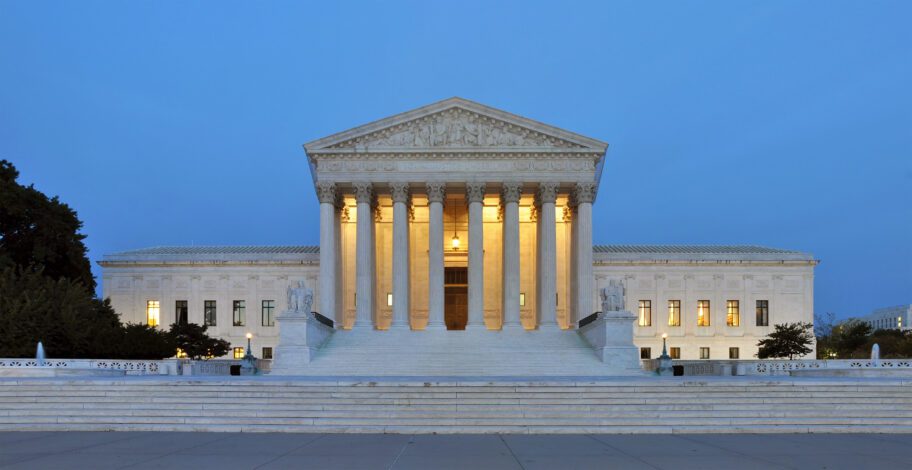
The case of Landor v. Louisiana Department of Corrections, which was argued on November 10, should shatter these assumptions. This case involves prisoner Damon Landor’s right to grow dreadlocks as a religious practice in accordance with his Rastafarian faith. In a scene that Justice Amy Coney Barrett twice called “egregious” in oral argument, guards at the Raymond Laborde Correctional Center in Cottonport handcuffed Landor to a chair and forcibly sheared off the locks he had taken years to grow.
It was 2020, and Landor had a copy in hand of the 2017 decision by the US Court of Appeals for the Fifth Circuit that held that another Louisiana inmate was allowed to keep his dreads to support the argument he made to the prison staff. They threw the court’s opinion in the trash. Landor had only three weeks left on his five month sentence for possession of methamphetamine, possession of cocaine, and possession of amphetamine, hardly enough time to regrow his hair and keep it once the prison realized its error.
Landor represents precisely the kind of religious freedom issue that progressives have historically championed. It should be getting all sorts of attention from actors on the left, like prison reform advocates. But it isn’t, and it’s worth asking why.
The facts are straightforward: Landor argues that the state’s grooming policy violates his sincere Rastafarian beliefs by prohibiting the dreadlocks central to his faith and therefore violates the Religious Land Use and Institutionalized Persons Act. Louisiana permits religious headwear and beards for other faiths but drew the line at dreadlocks, citing security concerns that courts in other states, including Illinois and Pennsylvania, had already found unpersuasive. After being sued over this policy twice, the state has since changed it.
While the ultimate legal question centers on the ability of Landor to receive monetary damages, the Court’s consideration of this case isn’t just about one man’s dreads or the law that protects them. It’s a referendum on whose religious practices we deem worthy of accommodation, which should be a natural cause célèbre for organizations advocating for prisoners’ rights.
Landor represents precisely the kind of religious freedom issue that progressives have historically championed.
Religious freedom for incarcerated people checks every box that typically animates progressive reform: challenging state power, protecting vulnerable populations, confronting discrimination against non-Christian minorities, and addressing the documented pattern of prison systems treating minorities as suspicious or dangerous.
Yet the response from progressive and prison-reform groups has been notably muted. Of the thirty-four amicus curiae briefs filed by 147 organizations, denominations, and individuals in the case (both before the certification stage and after), only three organizations—Human Rights Defense Center, Southern Center for Human Rights Center, and Rights Behind Bars—are dedicated to criminal justice reform (the ACLU, which works on these issues, filed a brief with other organizations).
In 2015, the Supreme Court issued a unanimous decision in Holt v. Hobbs protecting a Muslim prisoner’s right to grow a beard. The Women’s Prison Association (disclosure: I am on their Junior Board of Directors) and a group of self-described “Reformed Prisoners” filed amici briefs. Missing were the Vera Institute of Justice, the Sentencing Project, and the Equal Justice Initiative, all prominent reform organizations whose work addresses racial injustices in prisons.
Of course, filing an amicus brief is a resource-consuming endeavor, and religious freedom isn’t foremost in each of those organization’s missions; they work on, among other issues, sentencing reform and advocacy against capital punishment, so the absence from a Supreme Court docket shouldn’t be interpreted as an outright lack of support. But the lack of mention of the Holt or Landor cases on these organizations’ websites, even under Vera Institute’s “Dignity Behind Bars” campaign, seems like a missed opportunity.
Progressives have a complicated relationship with religious-freedom rhetoric. It seems like “religious liberty” is often considered a concept at odds with LGBTQ rights and reproductive freedom; many on the left have come to view the entire framework with suspicion. But freedom of the press, speech, and assembly sit next to freedom of religion for a reason. “Liberals during the postwar era prized the right of conscience because they were civil libertarians who wanted to protect individuals’ right to dissent,” is how Daniel K. Williams, a historian of American religion and politics at Ashland University, put it in Current, the now defunct publication.
Landor demonstrates why prison reform advocates cannot afford to cede religious freedom entirely to conservatives. The same legal framework that protects a Rastafarian’s dreadlocks also shields Muslim prayer practices, Indigenous spiritual ceremonies, and Buddhist meditation—precisely the minority religious expressions most vulnerable to state indifference or hostility. Minorities of all types—racial, ethnic, or religious—are disproportionately represented in prisons. The more progressive reform groups don’t miss an opportunity to remind the public of that.
Prison reform organizations should recognize Landor as an opportunity to reframe religious liberty as what it fundamentally is: a check on government power to dictate matters of conscience. Cases involving incarcerated people are especially compelling, because most prisoners cannot simply vote—either with their feet or with a ballot—or choose different institutions, and are instead utterly dependent on courts to protect their constitutional rights.
The question isn’t whether religious freedom matters—it’s whose religious freedom counts. If progressives only defend religious exercise when it aligns with majority practices or progressive values, we’ve entirely missed the point of the law that protects prisoners. Landor v. Louisiana Department of Corrections offers the prison reform movement a chance to reclaim religious liberty as a tool for protecting the vulnerable rather than empowering the privileged.