


The history of popular music is one of continual evolution, with one generation inspired by and then replaced by the next. Think the Beatles and Rolling Stones usurping their idols Buddy Holly and Muddy Waters. In the U.K., conventional wisdom holds that the pretension and precision of early 1970s prog rock acts like Yes and Genesis were smashed by the intentional amateurism and outrage of later-decade punk rockers such as the Sex Pistols and the Clash. This is perhaps best represented by the image of Johnny Rotten’s “I Hate Pink Floyd” t-shirt.
Pub Rock (Bloomsbury), a new book by Mark Wilkerson, biographer of Pete Townshend and Thunderclap Newman, shines some light on the overlooked genre of pub rock that catalyzed the shift from prog to punk. Wilkerson traces the genre’s birth in London pubs in the early seventies and its gestation of the world-shattering punk and New Wave scenes that followed.
I’m the audience for this book. As a teenager honing his musical tastes in the late eighties, I was introduced, by MTV and college radio, to the sounds of angry young men like Elvis Costello, Nick Lowe, and Graham Parker. Digging into their back catalogs, I discovered that Lowe especially was deeply intertwined with something called pub rock; his old band, Brinsley Schwarz, had been a major player in that scene. At the same time, I realized that Stiff Records—home to Lowe, Costello, and Parker, as well as the Damned and Madness—was run by two pub rock managers. In a sense, I’ve been waiting for this book for decades. And now that it’s here, I’m happy to dust off some old records while cueing up some new (to me) selections.
Wilkerson characterizes pub rock as “simply music that was played in pubs. A diverse mix was represented there: Roots rock, country, R&B, soul and rock’n’roll—both the good-time variety and the harder-edged stuff.” Unlike the sounds dominating airwaves and filling stadiums, pub rock was unadorned and earnest. It was neither glam nor grandiose.
While sonically similar to more mainstream rock and roll, pub rock had a slyly subversive allure. These seemingly square guys (yes, they are all guys) were about to birth punk. Every budding music snob tries to earn their bona fides with obscure knowledge. So learning that the dude behind “Cruel to Be Kind” had a previous professional life and that “(What’s So Funny ’Bout) Peace Love and Understanding” was a cover gave me an undeserved sense of superiority.
Pub Rock is part of the 33 ⅓ Genre series of primers on musical subgenres. It hews to the imprint’s mission, offering a quick, accessible entry point to a genre with little or no knowledge required, just curiosity. Like any good synopsis of a genre or musical scene, it sends the reader off to their favorite streamer or record store in search of a new listen or three.
In the age of the algorithm, we’re accustomed to being told, “If you like X, you’ll like Y.” However, snapshots like Wilkerson’s go beyond the “what” to tell you why you should add Dr. Feelgood or Brinsley Schwarz to your playlist.
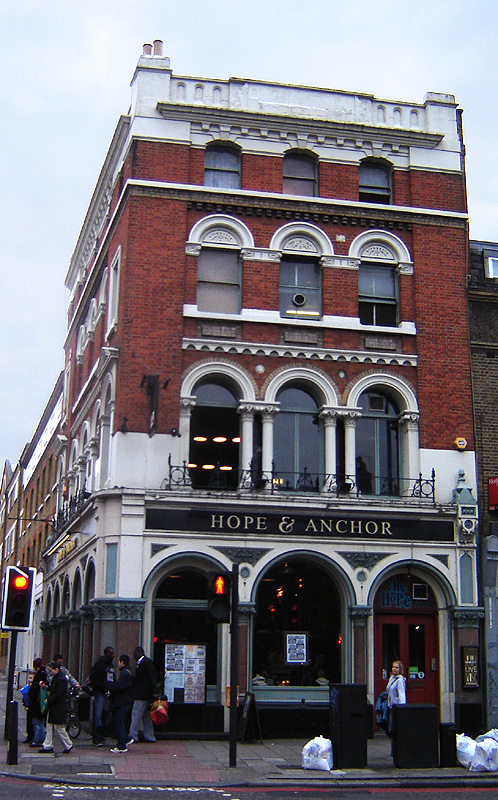
As the book’s title indicates, the scene grew around a series of pubs in London. Groups like the Rolling Stones, the Yardbirds, and the Band strongly influenced the nascent pub rock bands, but as Wilkerson notes, pub rock arose as big-name British acts were increasingly focused on selling out stadiums in America, and economic pressures were closing the venues that sustained the sixties scenes. Pubs, which had historically featured jazz acts, gave new bands opportunities to hone their skills and build followings. Wilkerson posits that intimate venues forced bands to up their game: proximity to Carlsberg-swilling audiences meant that you had to play your instruments and entertain the crowd without hiding behind light shows and heavy amplification.
The pub rock movement yielded a couple of minor hits, notably Ace’s “How Long,” now a staple of yacht rock radio. But many of its key figures became leaders in the punk and New Wave era. Ian Dury from Kilburn and the High Roads became the iconic leader of the Blockheads, while John Mellor from the 101ers became the even more iconic Joe Strummer of the Clash. Ace’s Paul Carrack had chart-topping success with both Squeeze and Mike + the Mechanics. The aforementioned Lowe went on to chart success as a solo artist, producer, and songwriter. Parker and Dave Edmunds enjoyed long careers. And pub rock’s DIY ethos—finding new places to play, hauling your own gear, building audiences from scratch—directly inspired the punk and New Wave scenes that followed.
It’s been said the Velvet Underground and the Ramones only sold a few copies of their debut albums but everyone who bought them started a band. It could be suggested that, similarly, everyone who encountered Eggs Over Easy or Brinsley Schwarz at the Tally Ho did the same. Artists as diverse as the Sex Pistols, Costello, Madness, and the Stranglers trace their roots to pub rock shows.
For those of us whose musical sensibilities were shaped in the eighties, Pub Rock is a welcome piece of the backstory. It’s a natural precursor to our Gen X nostalgia, and one that sits well with our middle-aged tastes and sensibilities. And its spirit endures everywhere teenagers gather in a garage to master a couple of chords and look for a new stage on which to perform.