


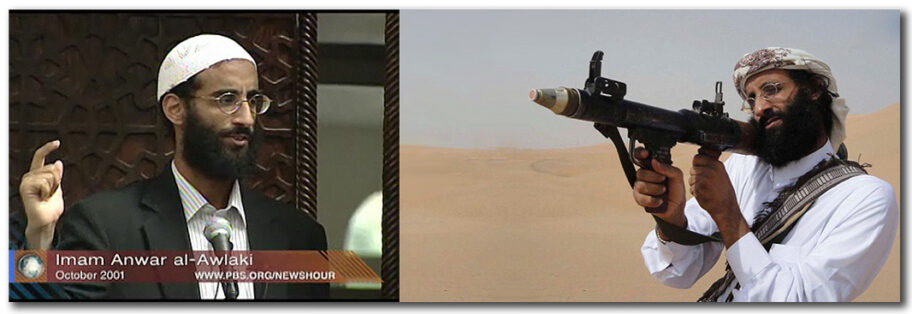
For a brief period, I worked alongside one of the most notorious terrorists in modern American history.
Or at least, that is one way of telling the story. It is not quite accurate—and the distance between that seductive sentence and the frustratingly elusive truth, even more than the ghost of the man himself, is what has haunted me for 25 years.
In the fall of 2000, I arrived at George Washington University Law School in Washington, D.C. I was in my early twenties, engaged to be married, and trying to figure out what kind of lawyer—and perhaps what kind of person—I wanted to become. I was also a practicing Hindu, and somewhere along the way I became the volunteer Hindu chaplain at GW.
“Chaplain” makes the role sound more formal than it was. Being the chaplain at GW was a labor of love, an unpaid gig that had me pledging a certain number of hours every week to serving and mentoring Hindu students, helping them find resources and community, and representing a tradition that was not especially visible or well understood on American campuses. I loved it. And it also made me part of GW’s larger multifaith chaplaincy community: Christian ministers and priests, rabbis, two Muslim chaplains, and me.
One of the Muslim chaplains was another graduate student, a young imam named Anwar al-Awlaki, who would later become one of the most wanted terrorists in the world, before being killed by a U.S. drone in 2011.
September 11, 2001:
That morning, I left my apartment in Foggy Bottom and headed toward the office of The George Washington International Law Review, where I was working on an article. The first reports I heard were confusing. A plane had hit the World Trade Center. Like many people, I initially pictured a small plane and assumed it had been a terrible accident. Then came another plane, then another tower, and gradually the pieces began to fit together.

It is strange, more than two decades later, which mundane details have stayed with me. Mobile phone service became unreliable or disappeared altogether. I remember standing in the middle of a D.C. street with other people, all of us instinctively holding our phones up in the air as though a few extra feet might somehow catch a signal. Cars stopped haphazardly; bewildered drivers climbed out and joined us in the ritual, raising their own phones toward the sky, leaving their car doors eerily open behind them as though the ordinary precautions of everyday life no longer mattered. The scene felt surreal, almost embarrassingly cinematic: the sort of thing people do in a clichéd disaster movie, except that we were actually doing it.
I went back to my apartment. My roommate and I, along with a few other graduate students from our floor, gathered around someone’s television. We watched the second tower come down.
I remember openly crying.
For me, September 11 felt intensely personal in two ways at once. I was a New Yorker; my high school was within walking distance of the World Trade Center, and for most of my senior year I had worked an after-school job as a gofer at a law firm in the South Tower. And now I was living in a neighborhood of Washington that suddenly seemed to be inside the target zone itself. The White House was within walking distance. From Foggy Bottom, we could see the plume of smoke rising from the Pentagon. A state of emergency was declared. At one point there was a warning about a possible bomb at the nearby State Department, which I later understood to have been a false alarm or a misunderstanding. That day, however, nobody knew what was real, what was rumor, what might happen next. I remember wondering, quite literally, whether I would live to see September 12. I chanted. I read. I prayed. I called my family and my fiancée. Mostly, I remember being scared.
In the days and weeks that followed, GW’s chaplaincy office mobilized. There were vigils, gatherings, prayers, conversations with students, and spaces simply to process grief and fear. Within a week or two came the harder conversations: religion and violence, just-war theology, terrorism, the relationship between faith and politics.
This was one of the moments that changed my understanding of chaplaincy. Until then I had thought largely in terms of serving Hindu students. Suddenly chaplaincy meant something larger: helping an entire campus in grief, helping people make meaning when ordinary categories had broken down, and standing beside religious leaders from other traditions when none of us had adequate answers.
In that period of fear and grief, I participated in at least one interfaith panel with an imam and, I believe, a rabbi. My memory of the details is fuzzy after 25 years, and I am hesitant to manufacture dialogue that I no longer remember. But I remember the substance: each of us tried, from within our own traditions, to explain that religion could make moral space for defense while also placing limits on violence; each of us condemned brutality and terrorism and the deliberate killing of civilians; each of us affirmed that our faiths were so much more than the politicization and weaponization of them. The rabbi’s name I can’t remember; the imam was Anwar al-Awlaki.
My memories of him are, in some ways, surprisingly vivid; in others they are striking mostly for how ordinary they are. He was slim, almost gaunt, and perhaps tall. He wore a full but well-groomed beard and was bespectacled, in a pair of elegant Gandhian frames. My memory has him sporting a white knit kufi skullcap. He seemed grave and quiet, a little mopey even. He did not smile or joke much, at least around me, and I remember him as somewhat socially awkward. The other Muslim chaplain seemed warmer and friendlier. Awlaki often appeared to be somewhere inside his own head.
I wish—for the sake of a juicier story, if nothing else—that I could tell you that something about him struck me as sinister. It did not. The hair on the back of my neck didn’t stand on end when he entered the room. On the other hand, I didn’t particularly like him. I found him strange and severe, a little too brooding, and mildly uncomfortable to be around. If my instincts were telling me anything, it wasn’t “terrorist.” It was closer to: this is a weird, intense guy I probably don’t want to hang out with.
But then, of course, he would get up to speak.
Whatever reservations I had about Awlaki personally, I remember being a little awed by him at the microphone. He was a remarkably good orator: articulate, measured, self-possessed, with a way of making an argument that commanded attention without seeming to demand it. The awkwardness I sensed in ordinary conversation seemed to disappear. I may not have wanted to grab coffee with the guy, but I wanted to hear what he had to say.
The inelegant truth is that both impressions were real. I found him off-putting, and I found him impressive. We were colleagues, not friends. I knew him well enough to recognize his manner and sit beside him at meetings and programs, but not well enough to know much about his private life. And in those weeks, nothing about that seemed remarkable.
At some point, I remember hearing that Awlaki had been invited to speak at the Pentagon. My reaction, as I remember it, was uncomplicated: this is good. It seemed like exactly the kind of bridge-building the country needed.
By then, the initial feelings of shock and grief after the attacks had begun to be joined by suspicion of Muslims and Muslim institutions—and, in some cases, by outright anti-Muslim hostility. And here was an articulate young American Muslim religious leader being welcomed into the very building that had been attacked, invited to explain his faith and offer the voice of a moderate Muslim, as a counterweight to the violent ideology the jihadists claimed represented authentic Islam.
Our colleague was being taken seriously as someone who could help Americans understand Islam.
And then—he was gone.
We heard he had left his doctoral program and moved away. There were, as I recall, uglier innuendos and questions surrounding his departure. But here too memory becomes treacherous. I cannot reliably separate what I heard then from what I learned later. And at the time, I had neither the desire nor the emotional bandwidth to participate in rumor or get pulled into what felt like thin conspiracy theories.
So life moved on. I finished law school. Got married. Began my career. The peculiar collection of people who had shared that moment in GW’s religious life scattered into our respective lives.
There is a detail about that visit that I would not learn until long afterward. But at the time there was nothing mysterious about it.
Years later, I was sitting somewhere mundane—was it a doctor’s waiting room?—half-watching a television that was playing CNN or another cable news channel. Suddenly a name caught my attention. His name.
Anwar al-Awlaki.
Whatever doubts I had evaporated as soon as I looked up and saw the face on the screen. His face.
Wait. I know that guy.
The quiet Muslim chaplain I had sat beside at GW was now on television. They were calling him an Islamic extremist. A jihadi terrorist.
Over time, a far more horrifying picture emerged. Awlaki had not merely become a fiery or radical preacher. He had joined al-Qaeda in the Arabian Peninsula, emerging as one of its most important English-language voices and preaching jihad against the United States. He used his unusual fluency in American culture and idiom—the same fluency I had watched him deploy so effectively as a chaplain and public speaker—to recruit and radicalize English-speaking Muslims. From Yemen, his sermons and recordings circulated around the world.
And, I learned, he was no longer simply talking. U.S. counterterrorism officials came to regard him as an operational figure within al-Qaeda. He communicated with Nidal Hasan before Hasan killed 13 people at Fort Hood in 2009, and afterward he publicly praised the attack. Umar Farouk Abdulmutallab, who tried to destroy a Detroit-bound passenger jet carrying nearly 300 people on Christmas Day in 2009 with explosives concealed in his underwear, later told investigators that Awlaki had directed him to carry out the attack. Awlaki acknowledged that Abdulmutallab was one of his students but denied instructing him to conduct that particular operation.
By 2010, the United States government was no longer merely investigating Anwar al-Awlaki. It was trying to kill him.
Awlaki was forty years old and still an American citizen when, on September 30, 2011, missiles fired from an American drone killed him in Yemen. Even in death, Awlaki remained divisive and provocative. The Obama administration described him as a senior operational leader of al-Qaeda and defended the strike as lawful; civil liberties groups challenged the government’s authority to deliberately kill an American citizen without trial. His targeted killing became a constitutional controversy of its own.
It was incredibly difficult to reconcile the Awlaki whom Time would name one of the hundred most influential people in the world, bluntly labeling him an “American Terrorist,” and whom an NYPD counterterrorism official called “the most dangerous man in the world,” with the person I encountered in 2001. It was, in fact, easier to think of them as two wholly different people, each somehow more comprehensible on his own than as part of the same life.
If the internet then had been anything like the internet we live with now, I probably would have stayed up all night tumbling down every Anwar al-Awlaki rabbit hole I could find. Of course, there were rabbit holes even then—but they weren’t quite as deep, interconnected, or inescapable as they are now. Information came more slowly and in fragments, and so did my understanding of what had become of the Awlaki I had known at GW.
For a long time, the story I pieced together was mostly about what happened after I knew him: al-Qaeda, Yemen, the drone strike.
But eventually I began learning about what had been happening while I actually knew him. And that was when the comforting distinction between those two Awlakis began to break down.
Because the FBI’s interest in Anwar al-Awlaki, I learned, had begun years before September 11.
In 1999, agents discovered contacts between Awlaki and several people under investigation for terrorist ties. They subsequently opened a terrorism-related investigation on the young imam. They determined that the Charitable Society for Social Welfare, an organization of which he was a vice president, was little more than a front for funneling money to terrorist cells. Though the investigation did not discover sufficient evidence for a criminal prosecution, Awlaki’s ties to terrorism kept him in the FBI’s sights.
Even more eerily, I learned of what happened in San Diego. In 2000, two young Saudi nationals attended the mosque where Awlaki served as imam; they respected Awlaki as a religious mentor and reportedly developed a close relationship with him. Those two men were Nawaf al-Hazmi and Khalid al-Mihdhar. Their names, while not as widely known as bin Laden, would become part of the terrible lexicon of September 11. A year after their visits with Awlaki, they would be among the five hijackers aboard American Airlines Flight 77, which crashed into the Pentagon.
And the story gets more unsettling. In early 2001, Awlaki moved across the country. He became imam of Dar al-Hijrah Islamic Center in Falls Church, Va. Incredibly, Hazmi subsequently appeared there as well. And then a third future hijacker of Flight 77, Hani Hanjour—the man who would pilot the doomed plane into the Pentagon—also attended Dar al-Hijrah during this period.
No concrete evidence exists, as far as I know, conclusively demonstrating that Awlaki knew about the 9/11 plot beforehand or knowingly assisted it. After September 11, the FBI repeatedly interviewed Awlaki about his relationships with the hijackers. For his part, Awlaki acknowledged meeting Hazmi several times but said he could not remember the specifics of their conversations. But the troubling fact remains that by the time they encountered Awlaki, all three had already been selected for the 9/11 operation.
What does it mean that three of the 19 hijackers—almost one-sixth of the men who carried out the September 11 attacks—had crossed paths with, and possibly taken guidance from, Awlaki between 2000 and 2001? Could it have been a fluke? Perhaps. But the 9/11 Commission concluded that the connections “may not have been coincidental.” And if it was mere coincidence, it is an awfully difficult coincidence to look away from.
It was incredibly difficult to reconcile the Awlaki whom Time would name one of the hundred most influential people in the world with the person I encountered in 2001. It was, in fact, easier to think of them as two wholly different people, each somehow more comprehensible on his own than as part of the same life.
All of this was happening, of course, while Awlaki was simultaneously studying at GW and serving as one of its Muslim chaplains.
By late September 2001, while my fellow chaplains and I were participating in the work of helping a shaken campus make sense of what had happened, the FBI had placed Awlaki under intensive 24-hour surveillance.
Agents watched him go about his life. And they watched him at GW.
The declassified surveillance records are strange for me to read, because they describe places and circumstances that overlap with my own memories. While I knew Awlaki as a doctoral student and fellow chaplain, federal agents were recording his movements, meetings, and travels. It is possible—likely, even—that while we sat together in chaplains’ meetings or interfaith dialogues, FBI agents were watching from afar and listening in.
Which brings me back to the Pentagon.
On February 5, 2002, Awlaki was invited to a luncheon there to speak about Islam and Middle Eastern politics and culture. Someone in the Department of Defense had previously heard him speak and apparently regarded him as precisely the sort of articulate moderate Muslim voice Americans needed to hear after September 11. That much aligns with my own memory of hearing of the prestigious invitation.
Here’s what I only came to know more than a decade later: that morning, FBI agents were following him. They tracked him taking the Metro toward the Pentagon. At 11:32 a.m., agents observed him exiting at the Pentagon station. At 11:40, they watched him walking toward the entrance. And then, at noon, a simple matter-of-fact note: “Surveillance discontinued at the Pentagon.”
One part of the United States government was secretly following Anwar al-Awlaki because of concerns about his apparent connections to terrorism. Another part of the United States government was inviting him inside the Pentagon as a bridge-builder who could help Americans understand Islam.
And somewhere in that same period, I was sitting beside him as a fellow university chaplain with little idea that both of those things were happening simultaneously.
And let me add this surreal (and salacious) footnote: there was apparently yet another life I knew nothing about. FBI surveillance also revealed that Awlaki, a married imam with a conservative religious public image, was regularly visiting prostitutes in Washington-area hotels. It is a bizarre detail, to be sure, but perhaps useful precisely because it frustrates my temptation to make this a tidy story about a double life. It suggests that there may have been three lives, or more: the imam and chaplain I knew; the private man whose secret vices would have scandalized his congregation; and the man who seemed to flirt with the extremist terrorist world in the shadows, and who would later openly embrace that world, even while he articulately condemned it while sitting next to me on interfaith panels at the university.
One part of the United States government was secretly following Anwar al-Awlaki because of concerns about his apparent connections to terrorism. Another part of the United States government was inviting him inside the Pentagon as a bridge-builder who could help Americans understand Islam.
Investigators never conclusively proved that Awlaki knew about the September 11 plot, much less participated in it. The possibility that he radicalized substantially later remains important to keep open.
But the opposite story has become difficult for me to accept as well: that the Awlaki of 2001 was simply a moderate American imam who only later transformed into something entirely different. The documentary record does not permit that certainty either.
There really was more happening around him than I understood. He really had encountered three of the men who would carry out September 11. Federal investigators really were sufficiently concerned to follow him. And it is entirely possible—if not probable—that his ideological journey to become one of al-Qaeda’s most influential English-language voices had already begun.
Who, exactly, was the man sitting beside me in 2001?
Did I work alongside a terrorist? It is seductively easy to arrive at the concrete, chilling, and perversely satisfying answer: yes.
Twenty-five years later, the temptation is to edit all of this backward. Every silence becomes sinister. Every serious expression, evidence. Brooding becomes menace; social awkwardness, a clue. Half-remembered conversations acquire ominous meanings they never possessed at the time. Even the gaps in memory begin to feel significant—like warning signs missed, or repressed traumas that can be revived through regression or hypnosis.
Memory edits the old footage once we know the ending. As much as I might want to, I cannot trust that kind of hindsight.
I also find myself thinking about my own instinct after September 11 not to participate in suspicion directed toward all Muslims. Knowing what I now know, I do not regret or rethink that instinct. The anti-Muslim fear and prejudice unleashed by September 11 were real. Nothing I subsequently learned about Anwar al-Awlaki changes that.
And yet nothing about the reality of anti-Muslim prejudice requires me to pretend that the suspicions surrounding this particular Muslim leader were imaginary. Both things can be annoyingly, messily true.
I think again of that interfaith table: a young Hindu law student, a young Muslim imam and doctoral student, a rabbi, other religious leaders—all trying in our imperfect ways to help a frightened university community make sense of religion after September 11.
We were talking about faith and violence, suspicion and understanding, what religion could do to divide human beings and what it might do to bring them together. We were all trying to understand an inconceivable tragedy, an unspeakable act of brutality.
But one of us had crossed paths with three of the perpetrators of that very act. One of us was being watched by the FBI. One of us would go on to openly embrace the very things he spoke out against so eloquently on those interfaith panels.
I don’t want to be so cynical as to conclude that there are no lessons to be gleaned and no takeaways to be had. But I want to be honest enough to admit what I can’t say.
I can’t say with any kind of certainty who the Awlaki of 2001 really was. The best I can do is acknowledge that he was an ambiguous presence in one of the most tender times of my life: someone with whom I shared extraordinarily intimate moments of national grief, fear, vulnerability, and spiritual searching, and yet someone I never felt particularly close to—and never really knew. We shared the kind of experience that ought to have made us close. Somehow, it didn’t. I don’t know if that is a blessing or a curse; whatever it is, it has left me with more questions than answers. Twenty-five years later, I still don’t know what to make of it.