


Forty years ago, “Liam” was the kind of name American tongues stumbled over. Too Irish, too foreign, too inconvenient. Now it is the most popular boys’ name in the country. That arc, from unpronounceable to unavoidable, says something about how America absorbs difference, and about the people it still refuses to fully absorb. In this, the week of St. Patrick’s Day, it is worth considering the changing nature of American immigration, assimilation, and belonging, and how the story of “Liam” reveals the country’s ongoing difficulties with managing difference.
That story is national, but for me it is also personal. “My friend just named her son Liam,” the woman next to me said, when I told her my name. It was a hot August day in 2004 and I was wedged in a tight auditorium seat. Dressed in a smart blue shirt and a pair of khaki capri pants that were the style of the day, the woman next to me was friendly and warm. I was neither. Having wrapped up my last shift at the pub just days before, I was determined that I wasn’t going to like anyone at this fancy law school. I could barely grunt a reply.
But my standoffishness with my future wife wasn’t just about my chip-on-the-shoulder attitude toward my new classmates. It was this name of mine—once obscure and unpronounceable on American tongues, now blazing across the country like a wildfire. Leon, Lamb, Leem, Lima, Mail (Liam backwards), Lie-am—the incorrect permutations of Liam were endless in the 1980s. It was an awkward name for an awkward kid. Nerdy and unathletic, I already had plenty of reasons to feel like I didn’t fit in. Each mispronunciation was a small cut.
The strange thing was that Stamford, Conn., was an immigrant-heavy town with no shortage of Irish people. There was the Hibernian Hall and Irish pubs and the Irish import store where I would go to buy chocolates after picking up my weekly allotment of comic books. The women behind the register tittered away in their brogues and always sought to locate me in the town’s community with an abrupt “Who’s your mother?”
Those women never batted an eye at the name. But they were the exception. Most of the Irish in town had been in the country too long, fought too hard to assimilate, to recognize a name of their own. It was Mrs. Healy, halfway down my street, who told me I’d probably have to change my name if I ever wanted to be a “professional.”
In 1979, the year I was born, Liam ranked #796 in the Social Security Administration’s baby name rankings. That was 0.007 percent of American boys. Liam was a moniker that was dwarfed by the Michaels and Christophers. There were no stickers bearing the name, no key chains that it would dangle from. I know—I stood in every drug store aisle spinning those wire racks and scanning for any hint of recognition. I never found one.
Eventually I heard rumors of another Liam in town. Not only did we end up at the same high school, we ended up in the same grade. But somehow even that didn’t stop my calculus teacher from calling me Leanne all year long, a uniquely grating experience in those more gender-rigid years.
I had often wished that my parents had chosen Liam’s English equivalent, William. Had they, I could have disappeared into any one of its various permutations: Will, Bill, Billy. Once, working an after-school tutoring program with a roomful of grade-schoolers, I experimented with escape. One of them couldn’t get his mouth around “Liam,” so I gave us both an out.
“Call me Billy,” I said.
He did, and it didn’t work. The whole thing hung about me like a play costume that didn’t fit. I never tried that again.
In 1979, the year I was born, Liam ranked #796 in the Social Security Administration’s baby name rankings.
I was given the name, in part, as a peace offering to my grandmother. That I would spend my childhood running from it had a special historical symmetry. She had left Ireland from Derry, itself a town with name issues. She boarded the S.S. Cameronia as Bridget. She arrived in New York as Bertha.
No one knows why she made this particularly tragic trade. She was bound to work in the new world as a domestic servant, and a “Bridget” in those days was shorthand for an Irish maid. I imagine she wanted to be something more than just her station in life—to be more than just a stereotype of herself. She had arrived at the tail end of a great wave of migration, a sixty-year period when the foreign-born population fluctuated between 13 and 15 percent of the country. It was an era when the United States, for the first time, placed broad quotas on who could come, and the Irish were among those the United States was trying to leave behind.
For the next fifty years, she lived a carefully constructed existence in the Bronx. From her two-family home on White Plains Road, her life was a tidy one where shirts and passions were tucked in and wiped clean. Then my father left the priesthood to marry my mother, a former nun. My parents spent years trying to make peace. Somewhere in the negotiations, Bertha mentioned a cousin back home in Donegal, Liam Bradley. They liked the name and gave me the whole thing, Liam as a first name and Bertha’s maiden name as my middle, hoping to replace her injured pride with pride in another generation.
By the time I left for the University of Notre Dame, the name had climbed to 162nd in the country. One in a thousand boys. Still rare, but Notre Dame was an alternate universe. The girl in front of me in the registration line had always wanted to name her son Liam. Someone else had a cousin named Liam. By the end of the first weekend, it seemed like every other person had a brother, uncle, or favorite-dead-pet named Liam.
For these people, the name carried weight. Someone would catch it and something would shift. These moments had happened before, back home, but so rarely I hadn’t known what to make of them. Now, when someone recognized the name, it was about more than pronunciation. They saw a family that had carried a name into America without anglicizing it, without sanding it down, and they understood that this small stubbornness said something about who we were. It was a bit like the university itself, which strives to be distinctly Catholic and excellent at the same time, to refuse the choice between identity and belonging. My name, it turned out, had been making the same argument all along.
I remember the first time a barista spelled my name right on a coffee cup. For years I had spelled it out automatically whenever anyone asked, four letters, every time. But one day I started and got a simple “I know” in response.
It was riveting.
And then it got hot. The name ranked #140 in 2000, top fifty by 2009, and top ten three years later. The rarer it had been, the more it had carried. Now it was everywhere and it carried nothing. The name that had been a weight in childhood and a badge later on was becoming wallpaper. By 2017, Liam had become the most popular boys’ baby name in the United States, it stayed there for the next eight years.
During its rise in the early 2000s, one of the first non-Irish Liams I met was a Dominican baby. Rather than annoying me, this delighted me, the name leaping across communities the way things do when people from everywhere are pressed up against each other and the borders start to blur.
I had blanched at the name’s popularity, sure that it meant the name had been stripped of everything that made it mine. But the name wasn’t being diluted. It was spreading outward across communities, each one claiming it as their own. I met a handful of Black Liams, heard Mexican moms yelling my name at their children in Spanish, was introduced to an Israeli immigrant who proudly proclaimed that he had just named his son Liam.
“It’s the most popular name in America!” he said with a broad, infectious smile.
My grandmother shed Bridget for Bertha to find belonging in this country, to soften the hard edges of an immigrant’s jagged life. I spent my childhood wishing for a name that would let me blend in. We were both, in our own way, trying to answer a question that America has never stopped arguing about: who gets to belong, and what you have to give up to prove it.
Today, the share of Americans born in another country is almost exactly what it was when Bertha arrived, roughly one in seven. Today, the nation tears itself apart over immigration, over the fear that new arrivals will change what it means to be American. And today, 22,000 boys a year are given a name that was unpronounceable and foreign forty years earlier.
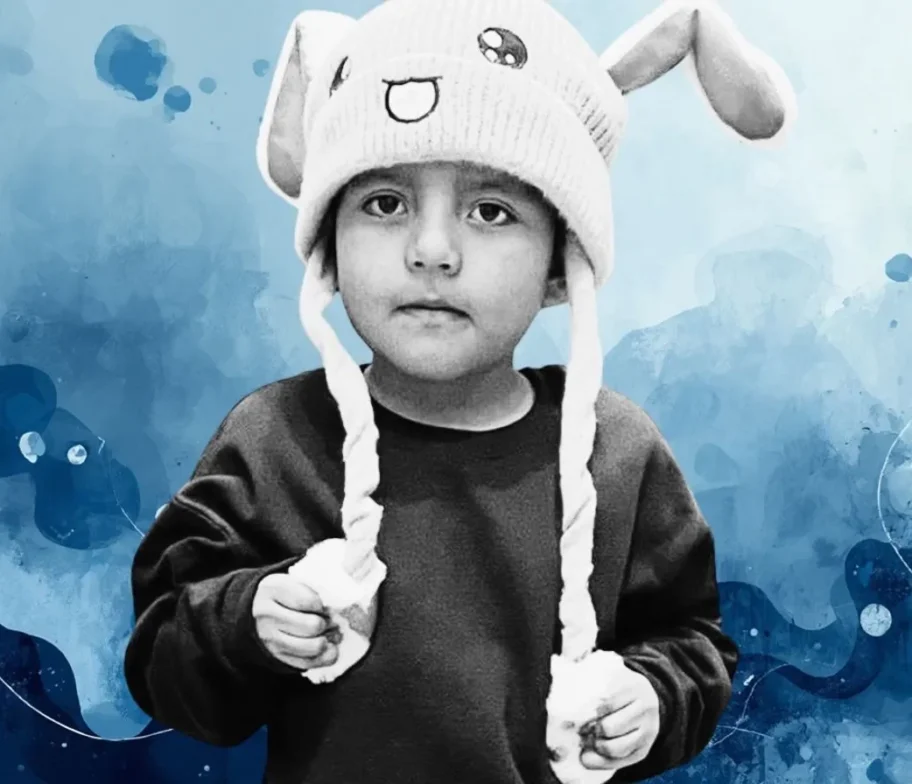
Today, it also belongs to a five-year-old boy in Minnesota. With chubby cheeks and a blue bunny hat, Liam Conejo Ramos, whose name means “strong-willed warrior,” was snatched by ICE agents on his walk home from school and sent to a detention center in Texas.
“We cried so much when we heard that he was coming back,” said neighbor Lourdes Sanchez when Liam was released. “My son is also named Liam, and he is five years old, so it felt personal for us.”